Choosing an engagement ring is about more than finding a beautiful stone. The overall design can change the way the ring looks, how the center diamond is presented, and the kind of personality it expresses.
With so many engagement ring styles available, it can be difficult to know where to begin. Some designs are simple and understated, while others use halos, side stones, intricate details, or vintage-inspired elements to create a more distinctive appearance.
The key is understanding the difference between ring style, setting, and diamond shape. A solitaire, for example, describes a particular ring design, while a prong or bezel describes how a stone is secured. The shape refers to the outline of the diamond itself.
This guide explores the major engagement ring styles, how they differ, and what to consider when choosing one.
What Are Engagement Ring Styles?
An engagement ring style describes the overall design and aesthetic of a ring.
The style can be influenced by the number of stones, the arrangement of those stones, the shape of the center diamond, the band design, metal, decorative details, and setting.
For example, a ring with one center diamond and a simple band has a very different appearance from a ring surrounded by smaller diamonds in a halo.
Jewelry guides from Tiffany and Brilliant Earth similarly distinguish overall style from the technical setting used to mount the gemstone.
Understanding this distinction makes it easier to compare different styles without confusing design categories with diamond shapes or setting techniques.
The Most Popular Engagement Ring Styles
There isn't one engagement ring style that suits everyone. Different designs appeal to different tastes, lifestyles, and preferences.
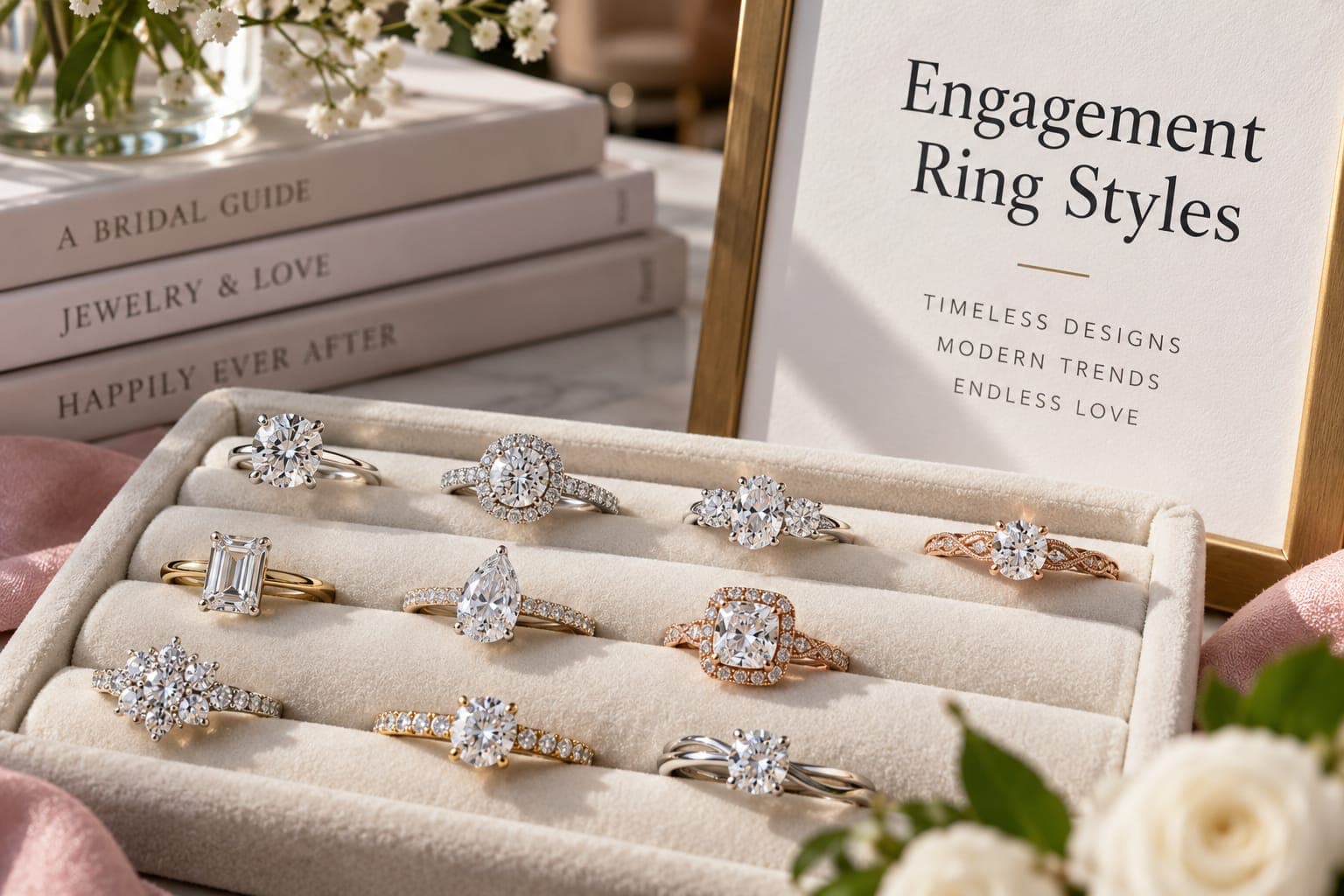
Here are some of the main styles worth knowing.
Solitaire Engagement Rings
A solitaire engagement ring features a single center stone without a surrounding group of accent diamonds.
Its simplicity puts most of the visual attention on the center diamond. This makes the solitaire one of the most recognizable and adaptable engagement ring designs.
A solitaire can look traditional with a round diamond and classic band, or more contemporary when paired with an unusual diamond shape, different metal, or modern band design.
The design also gives you flexibility when choosing the center stone. Round, oval, emerald, pear, cushion, marquise, and other shapes can work with a solitaire design.
Best suited to: people who prefer clean, timeless designs and want the center stone to remain the main focus.
Halo Engagement Rings
A halo engagement ring places smaller gemstones around the center stone.
The surrounding stones create additional sparkle and make the center of the ring visually more prominent. Halos can be designed around many different diamond shapes and can range from simple single halos to more elaborate arrangements.
A halo can also be combined with other design elements, such as pavé diamonds along the band or vintage-inspired detailing.
Tiffany and Brilliant Earth both describe halo designs as arrangements in which smaller stones surround the center stone, adding visual impact to the overall ring.
Best suited to: people who want additional sparkle and a more noticeable center design.
Three Stone Engagement Rings
Three-stone engagement rings feature a center stone accompanied by two side stones.
The three stones can be similar in size or arranged with a larger center diamond and smaller side stones. Different combinations of diamond shapes can also create different visual effects.
Three-stone rings are sometimes associated with the idea of past, present, and future, although the symbolism is not required to appreciate the design.
The arrangement also creates more visual width across the finger than a simple solitaire.
Best suited to: people who want a meaningful design with more presence than a traditional solitaire.
Vintage Engagement Ring Styles
Vintage-inspired engagement rings draw on design elements associated with earlier jewelry periods.
Common details can include:
Milgrain
Filigree
Hand engraving
Antique-inspired diamond cuts
Decorative metalwork
Intricate halos
Nature-inspired motifs
A vintage-inspired ring isn't necessarily an antique. A newly manufactured ring can use historical design elements while being made with modern materials and construction.
Brilliant Earth's current vintage guide distinguishes vintage-inspired designs from genuine antique rings and highlights details such as milgrain, filigree, engraving, and period-inspired diamond cuts.
Best suited to: people attracted to romantic, detailed, historical, or heirloom-inspired designs.
Modern Engagement Ring Styles
Modern engagement ring styles tend to experiment with proportions, materials, stone placement, and unusual silhouettes.
Examples can include:
East-west diamond orientations
Sculptural bands
Asymmetrical designs
Mixed metals
Minimalist settings
Unusual stone combinations
Hidden halos
Contemporary geometric details
Modern doesn't necessarily mean complicated. A very simple ring can also feel modern when it uses clean lines and contemporary proportions.
Best suited to: people who want something current, distinctive, or less traditional.
Minimalist Engagement Ring Styles
Minimalist designs focus on simplicity.
They often use:
Thin or clean bands
One center stone
Limited decorative elements
Simple metal finishes
Small or subtle accent stones
A minimalist engagement ring can overlap with a solitaire style, but the terms aren't identical. "Solitaire" describes the single-center-stone arrangement, while "minimalist" describes the overall aesthetic.
This distinction is useful when researching different engagement ring styles because one ring can belong to several design categories at once.
Best suited to: people who prefer understated jewelry and clean design.
Cluster Engagement Rings
Cluster designs group multiple gemstones close together to create a larger visual composition.
Rather than relying on one large center stone, several smaller stones work together to create the focal point.
Cluster designs can be traditional, floral, geometric, or vintage-inspired. They can also create substantial visual impact through the arrangement of several stones.
Best suited to: people who like detailed designs and want a distinctive alternative to a traditional solitaire.
Toi et Moi Engagement Rings
A Toi et Moi design typically places two gemstones side by side.
The name comes from the French phrase meaning "you and me," and the two-stone arrangement has become associated with romantic symbolism.
The two stones don't necessarily have to match. Different shapes or gemstones can be combined to create contrast and personality.
Modern customization guides also identify Toi et Moi as one of the foundational engagement-ring design directions alongside solitaire, three-stone, and accented designs.
Best suited to: people who want a romantic two-stone design with a distinctive appearance.
Engagement Ring Styles by Aesthetic
Another way to understand engagement ring styles is by looking at the overall aesthetic rather than the stone arrangement.
Classic
Classic engagement rings generally emphasize timeless proportions and familiar designs.
Solitaire, halo, and three-stone designs can all have a classic appearance depending on the details.
Vintage Inspired
Vintage-inspired designs use historical references such as engraving, milgrain, filigree, antique-style cuts, or period-inspired shapes.
Modern
Modern designs tend to use contemporary proportions, unusual arrangements, clean lines, or unconventional details.
Nature Inspired
Nature-inspired rings can incorporate leaves, flowers, vines, organic curves, or botanical motifs.
Minimalist
Minimalist designs reduce visual complexity and emphasize clean lines and simple proportions.
Unique
Unique engagement ring styles can combine unusual stone shapes, mixed metals, asymmetrical arrangements, colored gemstones, or unconventional bands.
These categories can overlap. A ring might be both vintage-inspired and minimalist, or modern and nature-inspired.
Engagement Ring Styles vs Settings vs Diamond Shapes
This is one of the most important distinctions to understand.
Style
Style describes the overall design.
Examples include:
Solitaire
Halo
Three stone
Vintage
Modern
Minimalist
Cluster
Setting
Setting describes how the gemstone is mounted or secured.
Examples include:
Prong
Bezel
Pavé
Channel
Cathedral
Tension
We'll cover these in detail in our separate engagement ring settings guide.
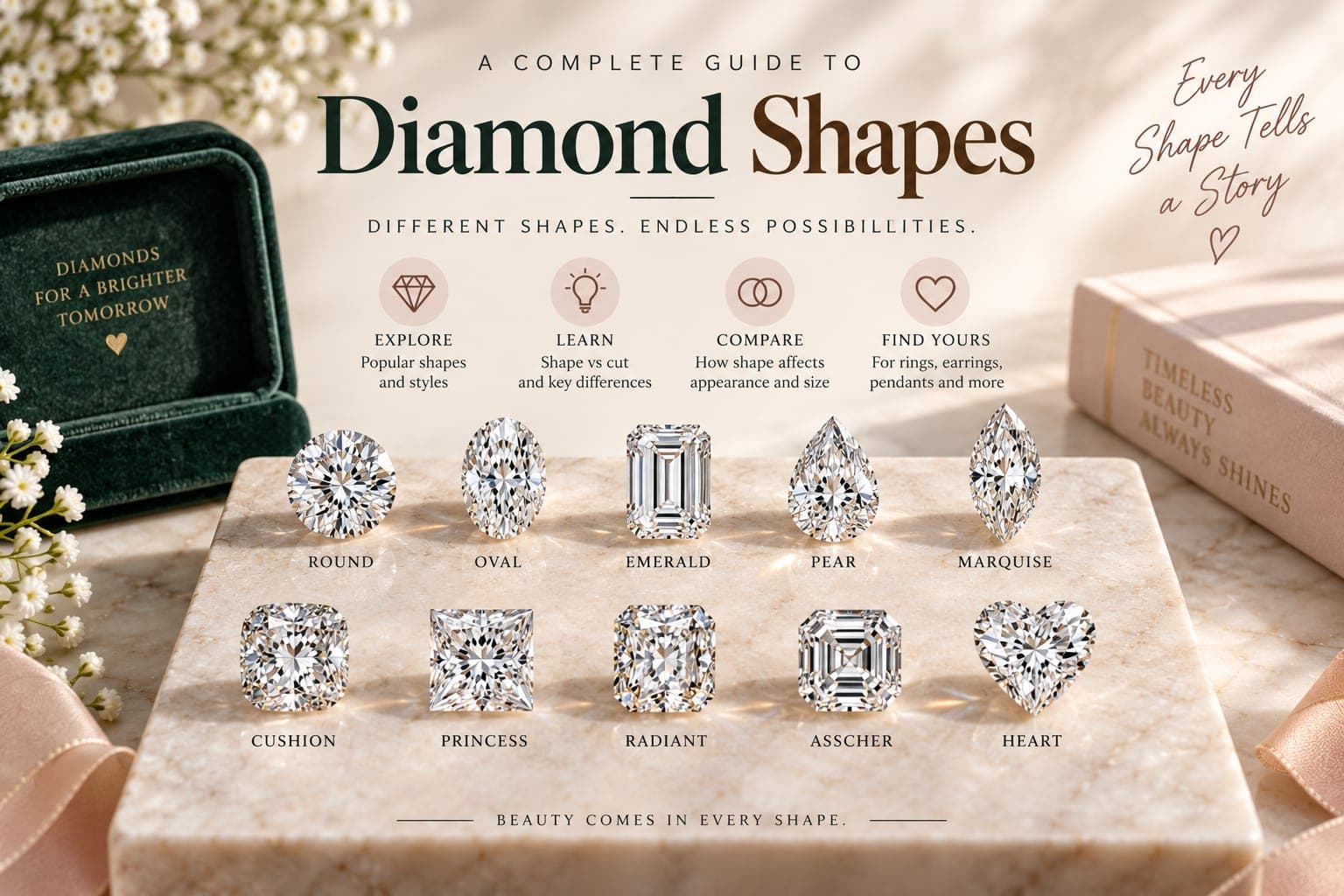
Diamond Shape
Shape describes the geometric outline of the diamond.
Examples include:
Round
Oval
Emerald
Pear
Cushion
Marquise
Princess
Radiant
This distinction is important because one ring can combine several categories.
For example, you could have:
A vintage-style solitaire with an oval diamond and a prong setting.
The style is vintage solitaire, the diamond shape is oval, and the setting uses prongs.
Tiffany similarly separates ring styles and settings from diamond shapes in its engagement-ring education material.
Engagement Ring Styles by Diamond Shape
The diamond shape can significantly change the appearance of the same ring style.
Round
Round diamonds have a traditional appearance and work with a wide variety of ring styles.
Oval
Oval diamonds have an elongated outline that can create a different visual proportion from a round diamond.
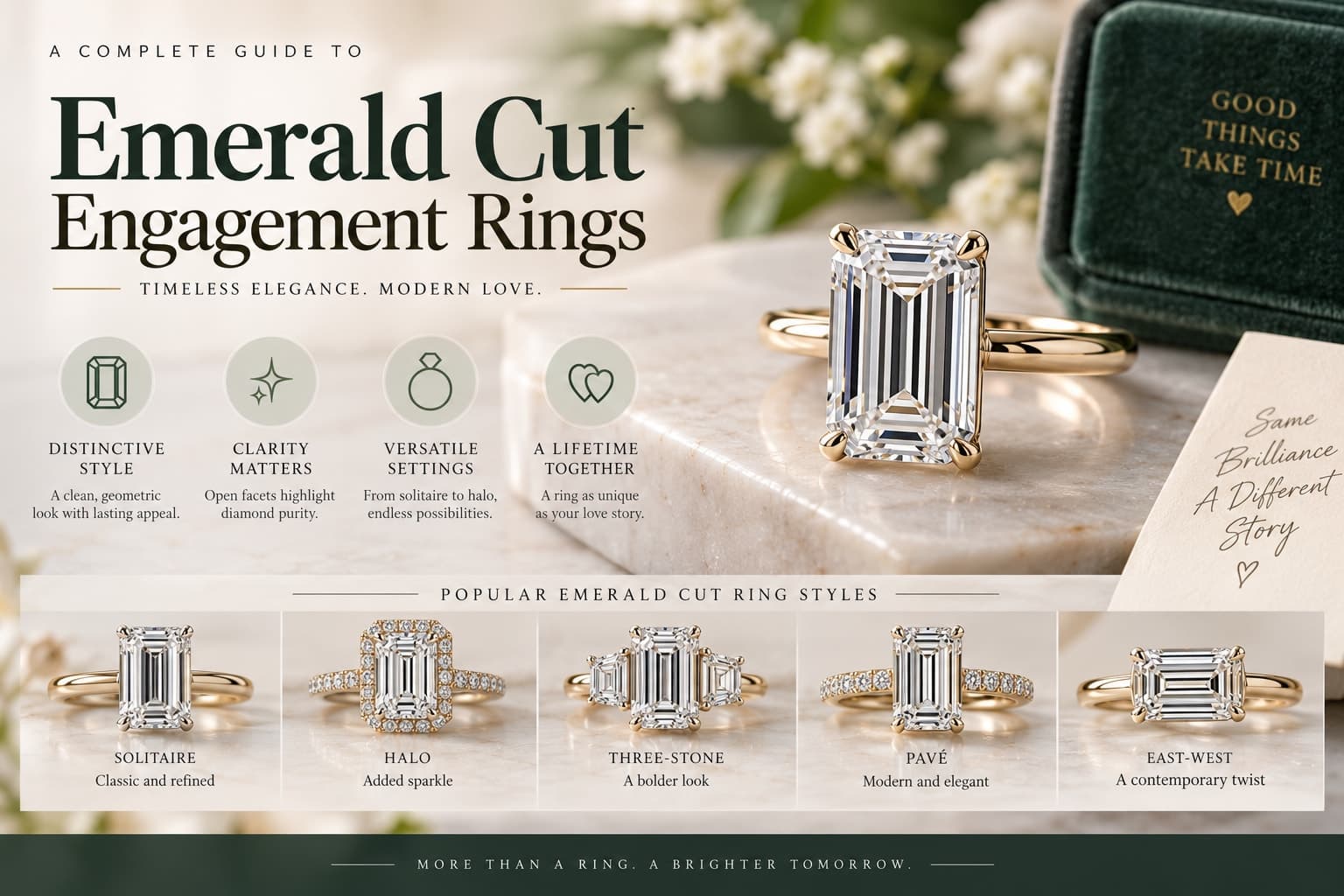
Emerald
Emerald-cut diamonds have a rectangular step-cut appearance and are known for their clean geometric look.
Pear
Pear-shaped diamonds combine a rounded end with a pointed tip, creating a distinctive silhouette.
Cushion
Cushion diamonds have softened corners and can create either a classic or romantic appearance depending on the ring design.
Marquise
Marquise diamonds have an elongated shape with pointed ends, creating a particularly distinctive profile.
Princess
Princess-cut diamonds have a square or rectangular outline with a modern geometric appearance.
Radiant
Radiant diamonds combine a rectangular or square outline with brilliant-style faceting.
These shapes deserve their own detailed discussion, which is why engagement ring shapes will be a separate article in the Love Happens Magazine content cluster rather than being turned into several competing style articles.
How to Choose an Engagement Ring Style
Choosing a style becomes easier when you consider several factors together.
Start With Personal Style
Think about the jewelry the wearer already owns.
Do they usually prefer:
Simple jewelry?
Vintage pieces?
Modern designs?
Bold statement pieces?
Delicate jewelry?
Yellow gold?
White metals?
Existing preferences can provide useful clues.
Consider the Center Stone
The diamond or gemstone should work with the overall design.
For example, an elongated stone may create a very different appearance in a solitaire compared with a halo, while a round stone can suit many different designs.
Think About Everyday Wear
An engagement ring is usually worn frequently, so appearance isn't the only consideration.
Think about work, hobbies, physical activity, and how much maintenance the wearer is comfortable with.
A highly detailed design may require different care from a simple ring.
Consider the Band
The band affects the overall proportion of the ring.
A narrow band can create a delicate appearance, while a wider or more detailed band can give the ring a stronger visual presence.
Decide How Much Detail You Want
Ask whether you want the center stone to dominate the design or whether you prefer a ring with multiple visual elements.
A solitaire puts the focus strongly on one center stone. Halo, cluster, and three-stone designs distribute more visual attention across multiple stones.
How to Find Your Engagement Ring Style
If you're unsure which style fits you, start by saving examples of rings you genuinely like.
Look for patterns.
You may discover that most of the rings you save share:
The same metal color
Similar diamond shapes
Similar bands
Similar stone arrangements
Similar decorative details
Similar proportions
Once you identify those patterns, it becomes much easier to describe your preferred style.
You can then compare specific settings and diamond shapes instead of trying to choose from every engagement ring available.
Engagement Ring Style Trends
Engagement ring design continues to include both traditional and contemporary directions.
Current industry guides show a wide range of approaches, including classic solitaires, three-stone designs, halos, vintage-inspired rings, nature-inspired designs, modern silhouettes, and customized combinations.
That variety is important because there isn't a single design that defines modern engagement rings.
Instead, couples can combine different elements to create something personal.
For example, a ring could combine:
Oval diamond + solitaire style + yellow gold + modern band
or:
Emerald-cut diamond + three-stone design + platinum + vintage-inspired details
The individual components work together to create the final appearance.
Frequently Asked Questions
What are the main engagement ring styles?
Some of the major styles include solitaire, halo, three-stone, vintage-inspired, modern, minimalist, cluster, and Toi et Moi designs.
What is the most classic engagement ring style?
Solitaire is widely associated with classic engagement-ring design because its simple structure keeps the center stone as the focal point. Current jewelry guides also describe solitaire as a classic and adaptable design.
What is the difference between an engagement ring style and a setting?
Style describes the overall design or aesthetic, while a setting describes how the gemstone is mounted or secured. A single ring can have a particular style and a particular setting at the same time.
Can one engagement ring have more than one style?
Yes. A ring can combine characteristics from multiple design categories. For example, a solitaire can have vintage-inspired details, or a three-stone ring can have a modern aesthetic.
How do I choose an engagement ring style?
Start with the wearer's existing jewelry preferences, then consider the diamond shape, setting, metal, band design, lifestyle, and desired level of detail.
Are vintage and antique engagement rings the same?
No. A vintage-inspired ring is newly made but incorporates historical design elements. An antique ring is an authentic older piece from the past.
Final Thoughts
The best way to understand engagement ring styles is to break the design into its individual components.
Style determines the overall aesthetic.
Setting determines how the stone is mounted.
Diamond shape determines the geometric outline of the stone.
Once you understand those differences, choosing between a solitaire, halo, three-stone, vintage, modern, minimalist, cluster, or Toi et Moi design becomes much easier.
And you don't necessarily have to choose one category alone. The most interesting engagement rings often combine several elements to create a design that feels personal.